
Heating and cooling move heat
A furnace produces heat by burning fuel or using electric resistance.
An air-source heat pump transfers heat between indoor and outdoor air. An air conditioner transfers indoor heat outside.
The core ideas that make heating and cooling systems easier to understand.
A furnace produces heat by burning fuel or using electric resistance.
An air-source heat pump transfers heat between indoor and outdoor air. An air conditioner transfers indoor heat outside.
The arrows show heat transfer, not outdoor air entering the house.
Outdoor air
Into the home
Indoor air
Outdoors
In a ducted system, blowers, filters, ducts, returns and registers work together to distribute conditioned air.
Ductless indoor units circulate air within the spaces they serve.
Depending on the system, thermostats and equipment controls manage temperature, operating stages, fan operation and schedules.
Controls do not replace professional evaluation of a safety concern.
Insulation, windows, air leakage, sun exposure, room layout, and duct condition all affect comfort and equipment performance.
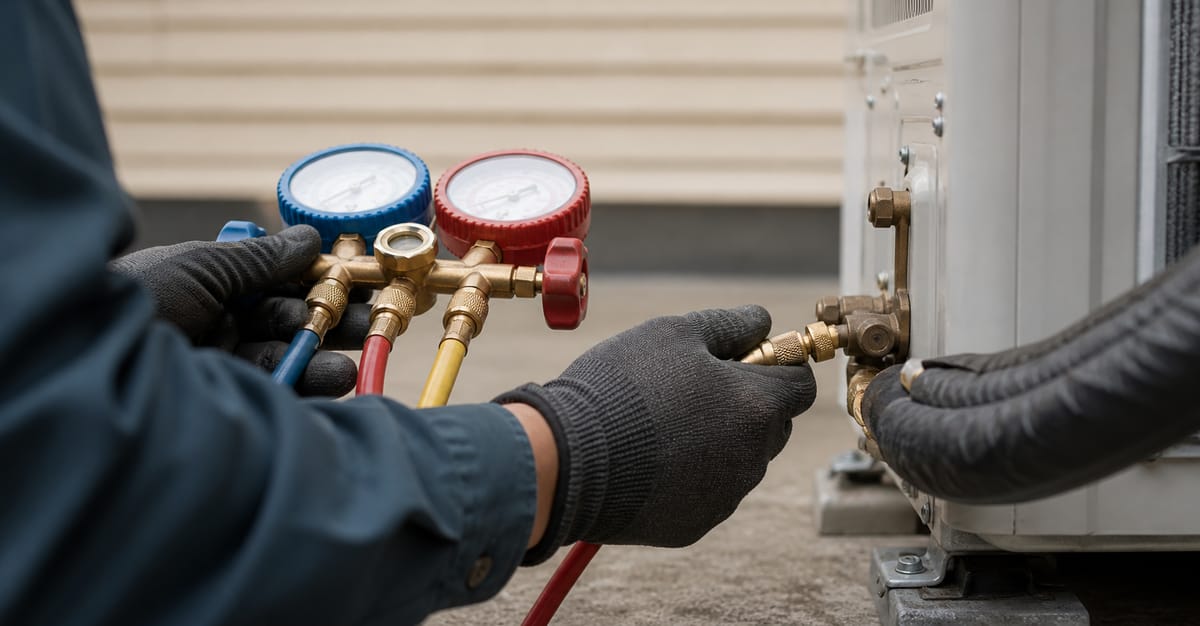
Air conditioners and air-source heat pumps circulate refrigerant through coils.
Changes in pressure and temperature let it absorb heat in one place and release it in another. This explains how the system works; refrigerant servicing belongs to a qualified technician.
SEER2 describes cooling efficiency over a season, while EER2 describes cooling efficiency under specified conditions.
HSPF2 describes a heat pump’s seasonal heating efficiency, and AFUE describes a fuel-burning furnace’s annual fuel efficiency. Compare the same rating under the same test method. Sizing, airflow, installation and operating conditions also affect performance in your home.
Prefer to talk it through? A real person can answer questions about your specific system.