
Understanding Your System

Learn what your records and safely visible equipment can tell you about your home’s heating and cooling system.

1 minute read6 short sections
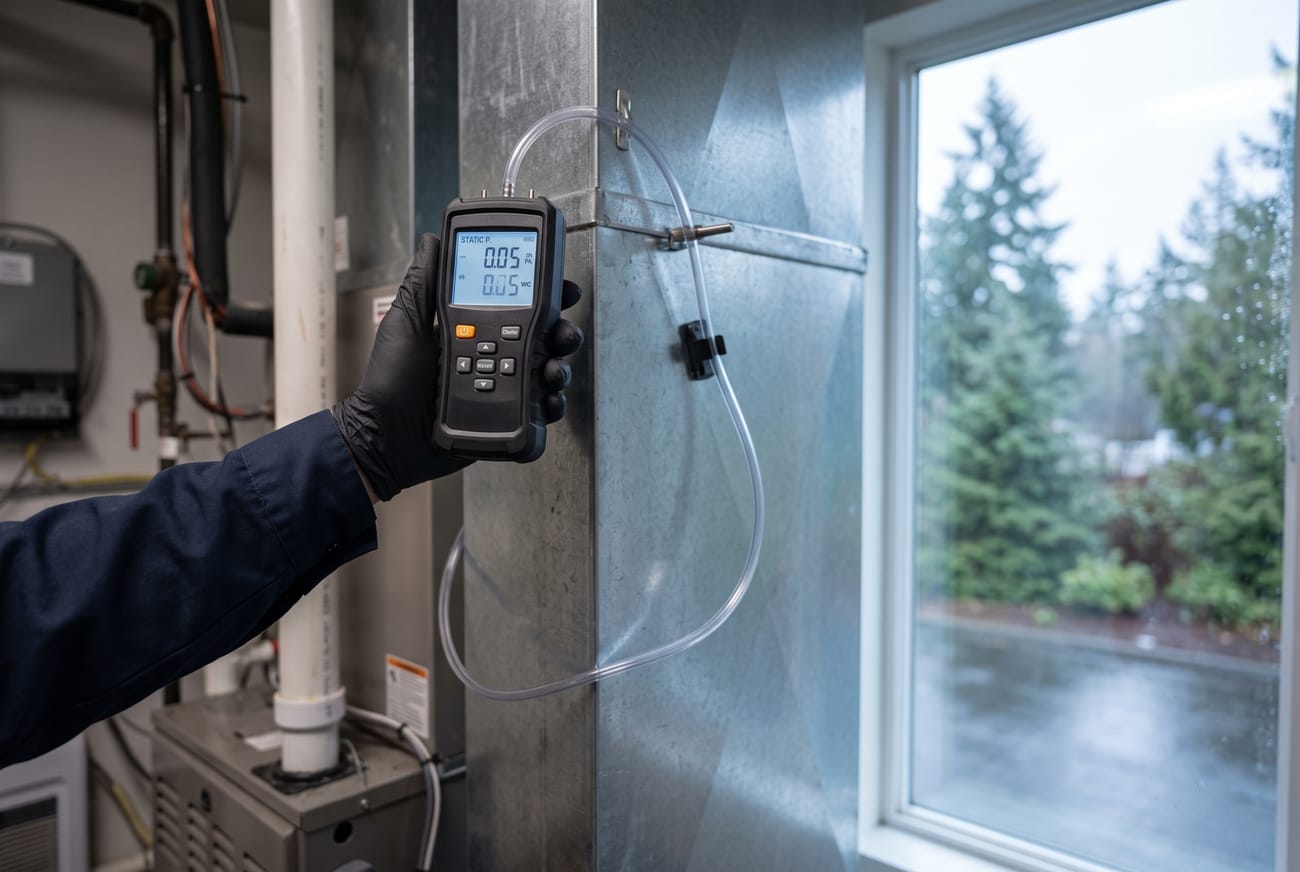
Illustration of a static-pressure test on ductwork.
Professional testing is separate from identifying your equipment.

Start with records and visible indoor equipment

Installation paperwork or a service record may identify a furnace, air handler, wall-mounted ductless unit or compact ducted unit.

Equipment that is already visible can provide context, but an air handler by itself does not establish the heating source.

Identify outdoor equipment without testing it

A conventional air conditioner provides cooling.

An air-source heat pump can provide both heating and cooling, and the cabinets can look alike. A model number from existing paperwork or a safely visible exterior label can help the manufacturer or a technician identify the unit.

Understand how comfort reaches the rooms

A home may use central ducts, ductless indoor units or a combination.

This distribution method affects which spaces each part of the system serves.

Leave capacity assessments to professionals

Fuel availability, electrical capacity, duct condition and home layout influence replacement options.

Have the appropriate qualified professional assess those factors; do not inspect wiring, breakers or equipment interiors to identify your system.

The components must work together

Indoor equipment, coils, outdoor equipment, controls and distribution must be compatible.

Some systems combine components in one cabinet. One model number may not describe the complete installed system.

The whole system works together.

A conceptual relationship, not an equipment-matching or installation plan. Arrangements vary, and some components share a cabinet.

Compatible equipment and controls

ControlsCoordinate system operation

Indoor equipment

Outdoor equipment

Work with the home’s distribution

Ducted delivery

Air travels through ducts to rooms.

Ductless delivery

Indoor units circulate air in the spaces they serve.

A home may use either approach or a compatible combination. Manufacturer specifications and professional assessment establish what works together; appearance alone does not.

Use model information as a starting point

Label contents vary. Model and serial information can help a technician find the manufacturer’s specifications and identify the installed combination. A label alone may not establish the whole system’s capacity or efficiency. If information is missing or unclear, leave identification to the technician.

Prefer to talk it through? A real person can answer questions about your specific system.